
 By Ukumbi Afrika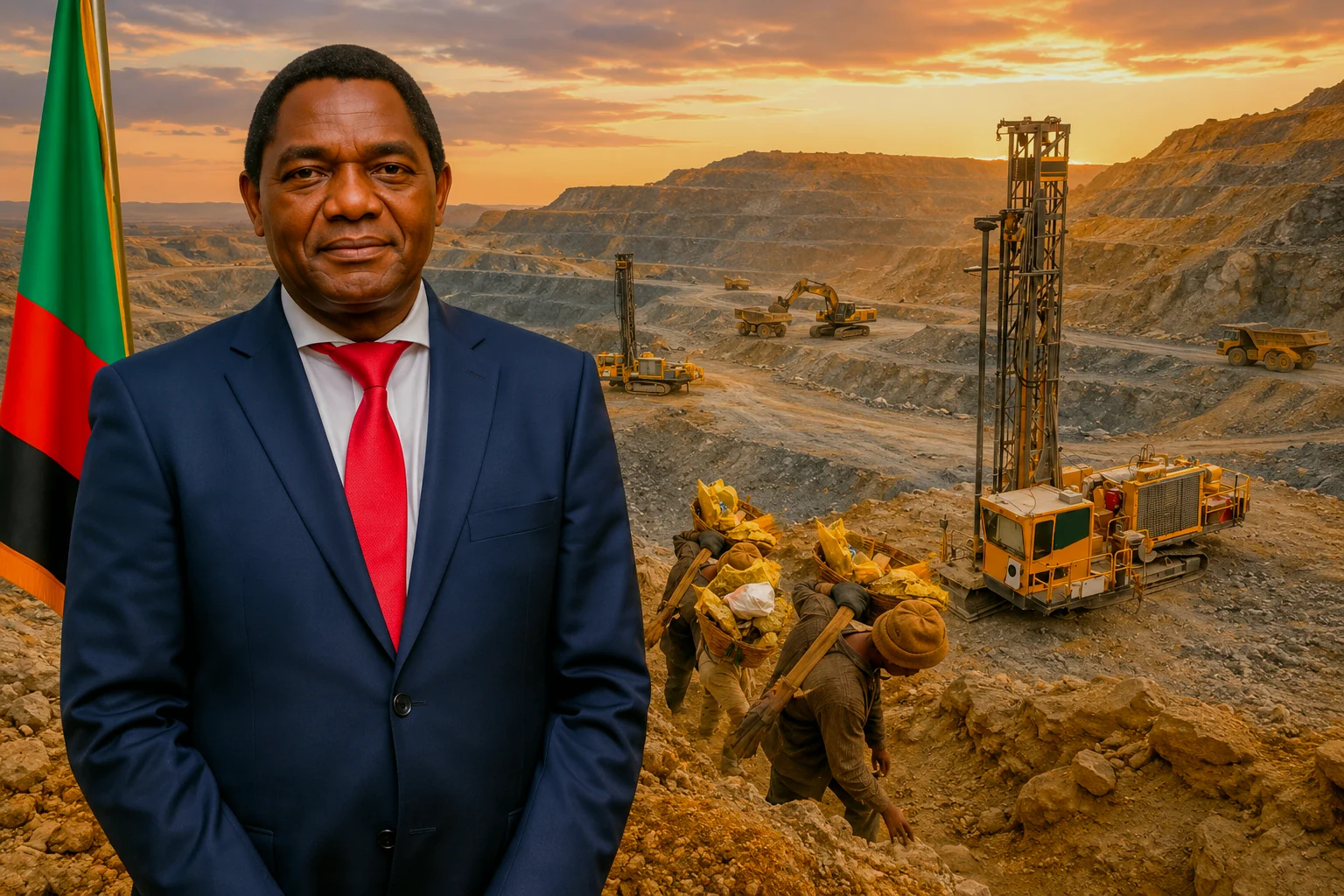
Tuesday, 18 August 2026
Johannesburg—Zambian President Hakainde Hichilema’s re-election has given investors the policy continuity they were seeking, but attention is now turning to whether his second term can convert years of economic stabilisation into stronger, sustained growth.
The election commission said Hichilema won roughly 60% of valid votes, compared with about 38% for his main challenger Brian Mundubile.
Investors broadly welcomed the result, with Zambia’s 2033 dollar bond trading at about 97.72 cents on the dollar, little changed despite wider weakness in African debt markets.
“For investors, Hichilema offers continuity, ” said Stuart Culverhouse, chief economist and head of fixed-income research at Tellimer.
The key test, he said, will be whether the government can build on lower inflation, improved fiscal discipline and greater macroeconomic stability while accelerating investment and economic growth.
New IMF Programme In Focus
Zambia is seeking a new IMF programme by the end of the year after its previous $1.7 billion arrangement expired in January.
The government has indicated that a renewed relationship with the Fund will remain central to its economic strategy, while Finance Minister Situmbeko Musokotwane has said Zambia needs fresh investment to drive growth and create jobs.
For investors, a successful IMF agreement could strengthen confidence and eventually pave the way for Zambia to return to international bond markets.
An eventual Eurobond could also establish a benchmark for Zambian companies seeking to raise debt internationally.
Infrastructure And Fiscal Discipline
Investors will also be watching whether Hichilema's government can maintain central-bank independence, transparent monetary policy and fiscal discipline as public spending shifts increasingly toward infrastructure.
LGT Capital Partners' Jetro Siekkinen said Zambia had delivered strong economic reforms, particularly in debt restructuring, fiscal management and the mining tax regime.
The challenge now is to ensure those reforms translate into stronger private-sector investment and broader economic growth.
Copper Offers A Major Growth Opportunity
Zambia, Africa's second-largest copper producer, is targeting annual production of 3 million metric tons, almost three times current output.
The ambition comes as global demand for copper rises because of its importance to power grids, construction and the broader energy transition.
But the country's dependence on hydropower creates an important vulnerability.
A severe El Niño-related drought previously reduced electricity generation, triggering rolling blackouts and contributing to a decline in copper production.
With scientists warning that the current El Niño has a greater than 90% chance of becoming a strong event, investors will be watching Zambia's energy security as closely as its mining expansion plans.
New IMF programme: Targeted by year-end.
Copper production: Ambition of 3 million tonnes annually.
Debt markets: Potential eventual return to international bond issuance.
Fiscal policy: Discipline as infrastructure spending increases.
Monetary policy: Continued central-bank independence.
Energy security: Drought and hydropower remain major risks.
Hichilema's re-election removes a major source of political uncertainty, but the second term will be judged less on stability and more on growth.
Zambia has spent years repairing its balance sheet and rebuilding investor confidence. The next phase will require turning that credibility into capital inflows, jobs, infrastructure and higher copper output — while avoiding a return to the debt and fiscal pressures that triggered its historic default.
Source: Reuters
Reporting: Colleen Goko
Additional Reporting: Karin Strohecker & Libby George
Editing: David Holmes