
 By Ukumbi Afrika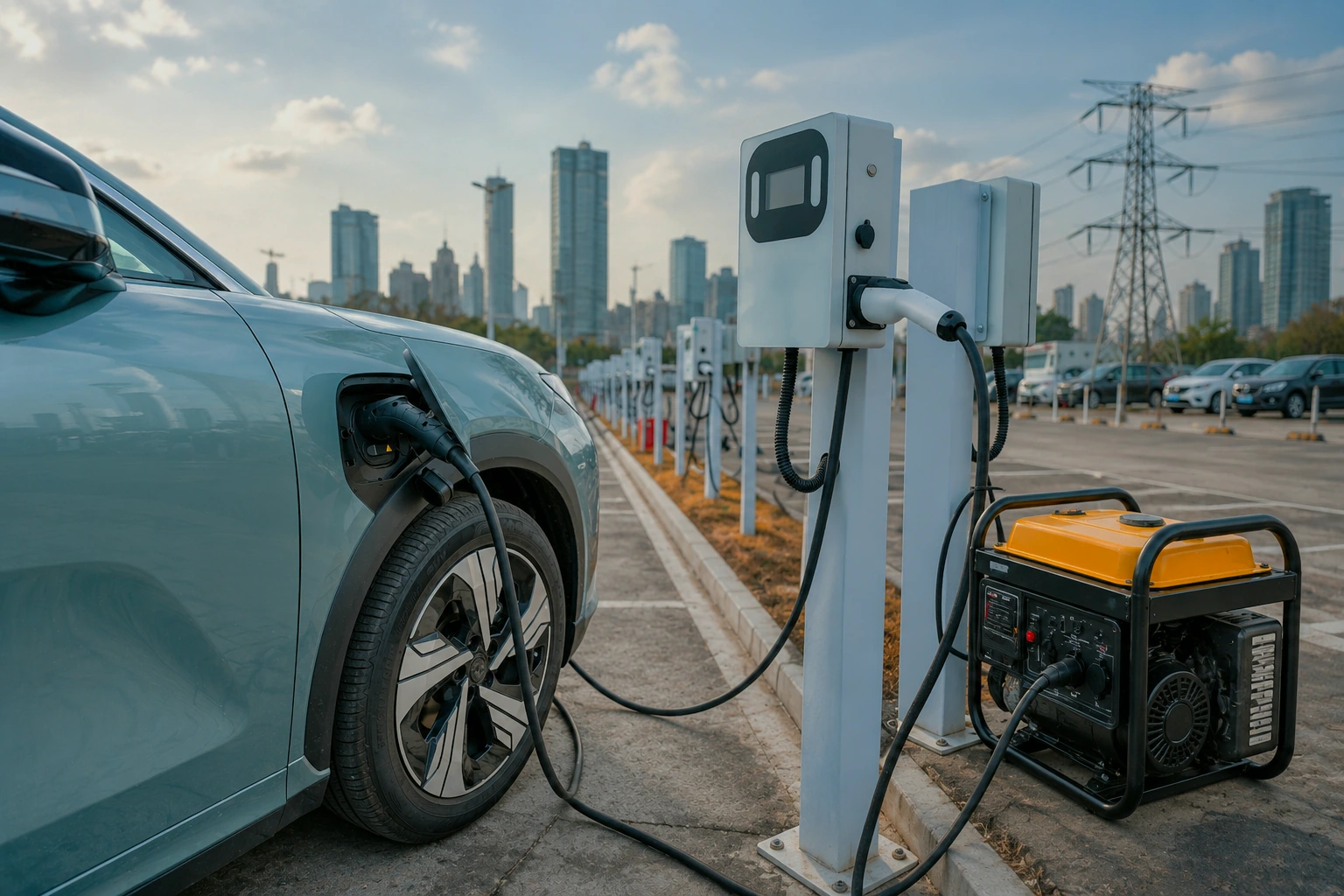
Lagos —Nigeria is pushing to accelerate the adoption of electric vehicles (EVs), but the country’s unreliable electricity supply is emerging as one of the biggest obstacles to the transition.
Government data reviewed by Reuters shows that Nigeria approved tax waivers for nearly 4, 000 electric vehicles in the first half of 2026, marking the first approvals under a new programme designed to encourage cleaner transportation through tax incentives and local assembly.
Nigeria’s 2022 Energy Transition Plan targets EVs accounting for 60% of the country’s vehicle fleet by 2050. Yet EVs currently make up less than 1% of Nigeria’s vehicles, according to industry estimates.
Power shortage threatens EV expansion
The country's electricity challenge remains significant. Nigeria’s national grid supplies around 4, 000 megawatts to more than 200 million people, forcing households and businesses to depend heavily on diesel and petrol generators.
That dependence is now extending to the EV industry.
Charging stations, dealerships and battery-swapping companies frequently rely on generators when grid electricity fails, raising questions about the cost and environmental benefits of powering electric vehicles with fossil-fuel-generated electricity.
“If we wait for electricity to become perfect before adopting EVs, the rest of the world will leave us behind, ” said Bolanle Boboye, an executive at Saglev, Nigeria's first electric vehicle manufacturer, affiliated with China's Dongfeng.
Nigeria removed VAT on EVs in 2024 and reduced import duties to zero this year from 5%, while higher petrol prices following the removal of the fuel subsidy in 2023 have increased interest in electric motorcycles, cars and buses .
Charging infrastructure remains limited
Nigeria's public EV charging network is still in its infancy.
A policy brief reviewed by Reuters estimated that the country had about 48 public charging stations by late 2025, concentrated mainly in Lagos and Abuja. South Africa, by comparison, had more than 500.
With limited public infrastructure and unreliable grid power, many Nigerian EV owners charge their vehicles at home using portable cables connected to household outlets.
Range extenders and hybrids gain traction
Power constraints are also influencing which vehicles Nigerian consumers choose.
Extended-range EVs, which combine battery propulsion with a small fuel-powered generator, have reportedly helped drive a doubling in sales this year, according to Boboye.
Chinese manufacturers including BYD and Geely are also expanding their presence with electric and hybrid models that can better accommodate Nigeria's challenging electricity environment.
Tim Motors, Geely's Nigerian partner, said new-energy vehicles, including hybrids and fully electric models, now account for around 2% of its vehicle sales.
Electric motorcycles may lead the transition
For now, analysts believe electric motorcycles and three-wheelers could offer Nigeria the fastest route toward mass electrification.
Nigeria has more than 15 million motorcycles, and riders have been particularly affected by higher petrol prices since the subsidy removal.
Electric mobility startup Donda X said electric motorcycles and tricycles can reduce operating costs by about two-thirds compared with petrol-powered alternatives.
Companies such as MAX and Spiro are investing in battery-swapping networks, allowing riders to exchange depleted batteries within minutes rather than waiting for conventional charging.
The approach could also reduce dependence on Nigeria's fragile electricity grid because batteries can be charged centrally, potentially using a combination of grid and alternative power sources.
Nigeria's EV transition illustrates a wider challenge facing Africa's energy transition: clean-energy ambitions cannot scale without reliable infrastructure.
Tax incentives can make EVs cheaper, but unreliable electricity, limited charging infrastructure and dependence on generators could slow adoption. In the near term, electric motorcycles, tricycles, hybrids and range-extender vehicles may prove more practical than fully electric passenger cars.
For Nigeria to reach its 2050 EV ambitions, investment in power generation, transmission, distribution and charging infrastructure will be just as important as incentives for vehicle buyers and manufacturers.
Source: Reuters
Reporting: Isaac Anyaogu & Abraham Achirga
Editing: Jan Harvey