
 By Ukumbi Afrika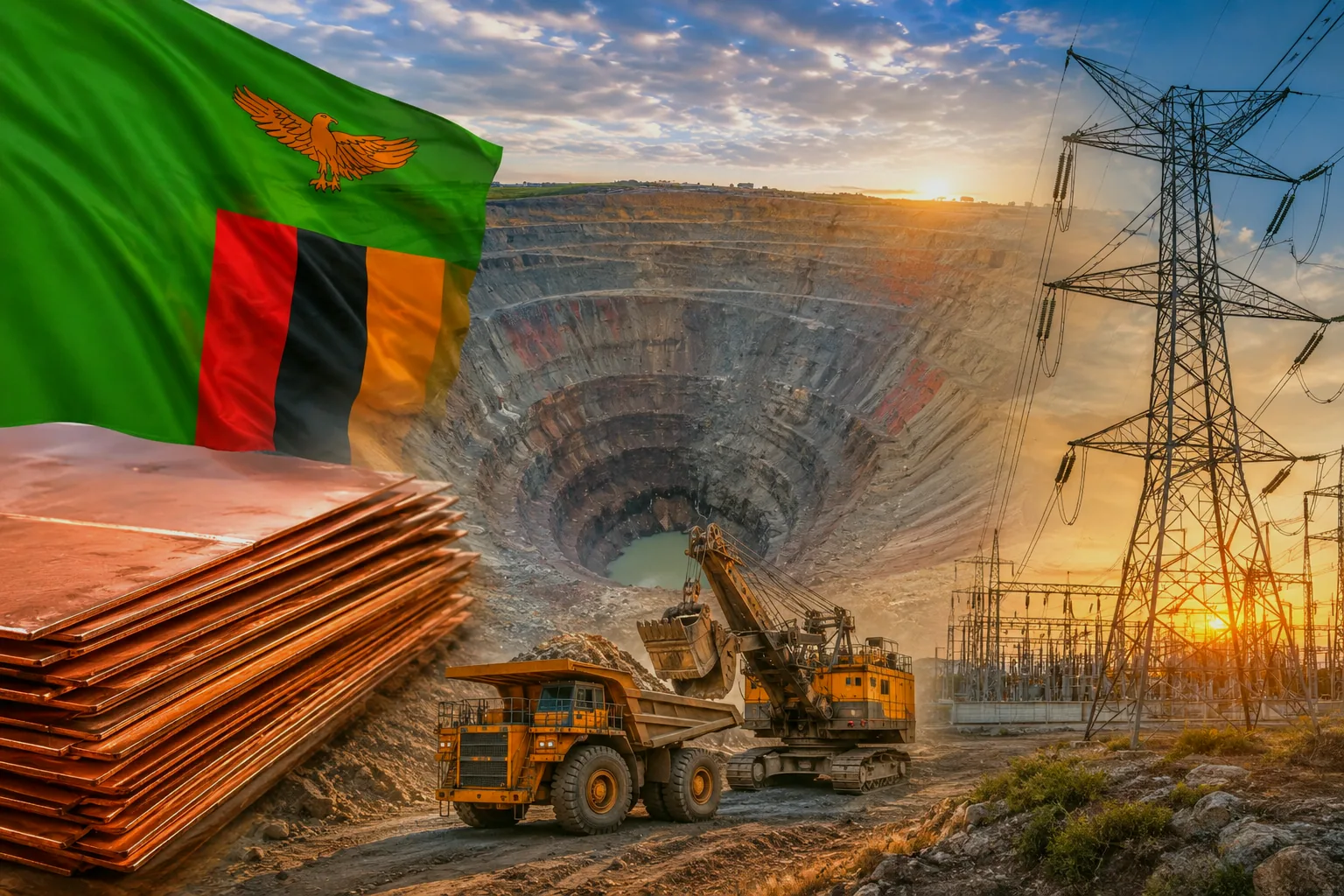
Lusaka— Zambia’s mining industry is looking to the country’s presidential and parliamentary elections for continued policy support as producers seek to dramatically expand copper output and attract billions of dollars in new investment.Usama
Zambia, Africa’s second-largest copper producer, aims to increase annual copper production to 3 million metric tons, nearly three times current levels. Mining executives say achieving that target will require greater incentives for mineral processing, renewed exploration and substantial investment in electricity generation.
Copper prices have risen by more than 40% over the past year, reaching around $14, 000 per metric ton, driven by expectations of growing demand from electric vehicles, power networks and construction.
“The ambition to triple copper production will require stronger incentives for exploration, local manufacturing and value addition, alongside major infrastructure investments, ” said Ayo Sopitan, chief executive of Metalex Commodities.
Sopitan also called for stronger rule-of-law protections and dispute-resolution mechanisms, while warning that export duties on copper concentrates continue to weigh on producers without refining capacity.
Mining Investment Gains Momentum
The Zambia Chamber of Mines says tax reforms and closer engagement between the government and mining companies have helped attract more than $10 billion in investment since the 2021 election.
Chamber president Anthony Malenga said discussions between the government and mining companies have helped address many competitiveness concerns, but warned that Zambia's long-term growth ambitions depend on rebuilding its exploration pipeline.
“The mining industry needs real growth and this can only happen with increased spending on greenfield exploration, ” Malenga said.
He also called for licensing reforms to ensure exploration permits are held by companies with the financial and technical capacity to develop projects.
Power Supply Emerges as Major Constraint
Mining is central to Zambia’s economy, contributing about 9% of GDP, 72% of export earnings and nearly half of government revenue.
However, electricity supply remains one of the biggest obstacles to expanding copper production.
Industry executives estimate Zambia needs at least 2, 000 megawatts of additional generating capacity to support its production ambitions, although recent investments are expected to ease some supply pressures.
Signal Risk analyst Menzi Ndhlovu identified power shortages and labour costs as key risks to the sector’s expansion, noting that mining companies could face pressure from unions for higher wages as activity accelerates.
Election Seen as Key to Policy Continuity
More than 8 million registered voters are expected to participate in the August 13 election to choose the president, lawmakers and local government representatives.
President Hakainde Hichilema is widely expected by analysts to win a second term, with investors anticipating broad continuity in economic and mining policies.
The government has introduced reforms covering currency regulations, local-content requirements and fuel costs during the past four years. Industry executives expect limited changes to the fiscal regime following the election.
For Zambia’s mining sector, however, the next phase will depend less on policy continuity alone and more on whether the government can deliver the infrastructure, exploration incentives and processing capacity needed to turn the country’s copper ambitions into reality.
Source: Reuters
Reporting: Chris Mfula & Maxwell Akalaare Adombila
Editing: Jason Neely