
 By Ukumbi Afrika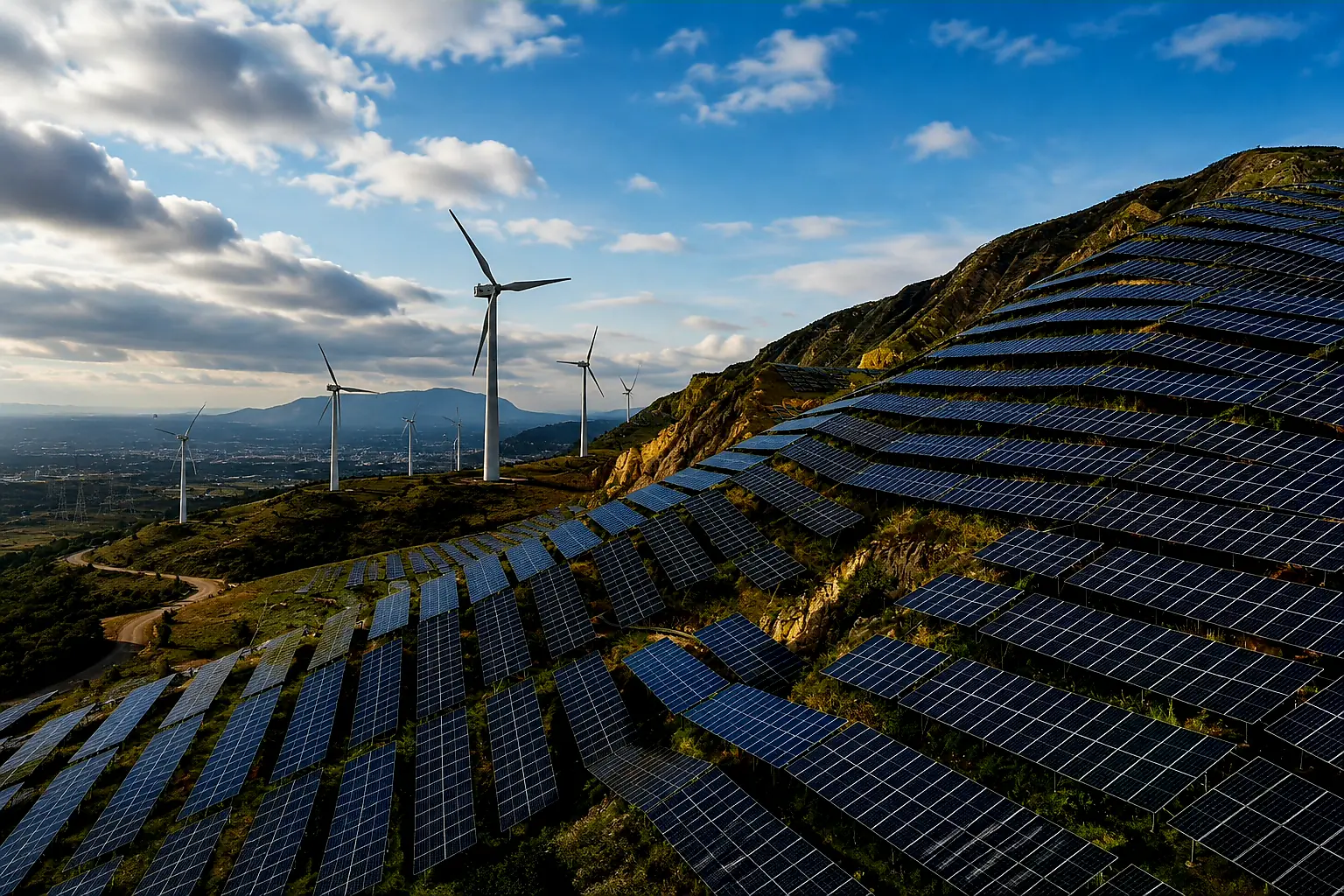
Wednesday, 26th August 2026
Johannesburg—South Africa's mining companies are accelerating investment in renewable energy as they seek to reduce electricity costs, strengthen energy security and meet decarbonisation targets, marking a significant shift from decades of dependence on state utility Eskom.
Companies including Anglo American and Sibanye Stillwater are increasingly turning to wind and solar projects as Eskom’s ageing coal-fired power fleet continues to face challenges in meeting the country's electricity demand.
Despite the shift, mining executives say Eskom will remain an important source of baseload electricity for years, as renewable generation remains intermittent and battery storage technology continues to develop.E
South Africa currently generates more than 80% of its electricity from coal, while renewables account for roughly 10%.
Anglo Expands Renewable Partnership
Anglo American is among the mining companies partnering with independent power producers to develop renewable generation.
In 2022, the company established a 50-50 joint venture with EDF power solutions, a subsidiary of France’s EDF, to supply renewable electricity to its operations, including Kumba Iron Ore, De Beers and Valterra Platinum.
The venture, Envusa Energy, currently generates 520 megawatts, comprising 280 MW of wind power and 240 MW of solar. That represents about 30% of the energy consumed by Anglo's mines.
Envusa has a project pipeline of around 1, 500 MW and aims to reach 3, 000 MW of generation capacity by 2030, supplying Anglo's operations and other industrial customers.
Envusa CEO Nicole Mason said renewable electricity from wind and solar could be 20% to 30% cheaper than conventional power.
The company is also developing additional wind projects and solar-plus-battery installations located close to customers.
Sibanye Chooses Power Purchase Agreements
Sibanye Stillwater is taking a different approach, opting to secure renewable electricity through short- and long-term supply agreements rather than owning generation assets.
The company obtained about 99% of its platinum group metals electricity requirements and 88% of its gold electricity requirements from Eskom last year.
It has now contracted 835 MW of renewable energy capacity, with 164 MW already operational.
By the end of 2028, renewable energy is expected to account for approximately 64% of total energy demand across Sibanye's south African operations.
The company says the transition is both an environmental and commercial strategy, with renewable electricity expected to cost 20% to 30% less than forecast Eskom tariffs.
However, CEO Richard Stewart said Eskom would remain essential because renewable generation cannot consistently provide electricity around the clock.
Coal Miners Also Invest in Renewables
South Africa’s coal producers are also expanding their renewable energy portfolios.
Exxaro Resources, through its renewable energy subsidiary Cennergi, currently operates 297 MW of renewable capacity and has a near-term pipeline of another 593 MW.
The company is targeting 1, 600 MW of net installed capacity by 2030 as part of its strategy to reduce Scope 1 and Scope 2 emissions.
A 68 MW solar plant at Exxaro’s Grootegeluk coal mine has already reduced the mine’s dependence on the national grid by about 30%, saving an estimated 100 million rand ($6.25 million) annually in electricity costs.
Exxaro aims to reduce its Scope 1 and Scope 2 emissions by 40% by 2030 and 70% by 2040, with a longer-term target of carbon neutrality by 2050.
Coal-Bed Methane Offers Another Route
Thungela Resources is pursuing coal-bed methane as another way to diversify its energy supply.
Its Lephalale project in Limpopo's Waterberg coalfield is designed to extract methane from coal seams, with the longer-term possibility of developing a commercial liquefied natural gas business.
The company has drilled about 19 wells and has begun extracting gas that will be used to fuel a generator at one of its sites.
Chief Financial Officer Deon Smith said the project could eventually reduce Thungela’s Eskom electricity bill by 30 million to 40 million rand annually, equivalent to around 6% to 7% of its total utility costs.
Eskom Still Central to Mining Energy Mix
The accelerating renewable-energy investment reflects a broader transformation in South Africa’s mining sector, where companies are increasingly seeking greater control over their electricity supply.
However, the transition is unlikely to eliminate Eskom from the mining industry’s energy mix in the near term.
For miners, the emerging model is increasingly one of diversification rather than complete replacement — combining renewable generation, battery storage, alternative fuels and Eskom's baseload electricity.
Source: Reuters
Reporting: Olivia Kumwenda-Mtambo and Nelson Banya
Writing: Olivia Kumwenda-Mtambo
Editing: Jan Harvey